Modern OS, Legacy Iron: Why I’m Betting on AlmaLinux 10 on my Aging HPe 'Elite' hardware

I laugh (to myself) when I think of all the ‘large scale’ Linux-based datacenters I previously worked at, which since they’re locked into RHEL support contracts (which IMHO are useless) are having to consider the costs of replacing ALL of their existing server equipment (HP 380, 580, 980 G7, G8, etc) just because the O/S vendor won’t support them… (and not that they’re obsolete or ‘slow’)

My ‘home’ installations/configurations are no less encompassing than my previous work locations, with ‘smaller’ versions of each component of the infrastructure (i.e. a little DDI server for DNS/DHCP/Identity manglement), such that ‘I’ need the same O/S and application resources as them…

Though most of my equipment is based on the 8300 Elite models (small form factor, convertible ‘tower’) and 8570p laptops, which though presented back in 2012, are modern enough to support SCSI-over-USB external devices, and have up to 10 USB ports. AND, supporting the i7-3770 CPU, provides enough processing power for more than anything that ‘I’ will do at home… (and the HD4000 GPU is more than enough for desktop graphics and 4K video).

Such that, ‘I’ have no intention of disposing of all my current hardware just so I can use the ‘latest and greatest ?’ O/S…

Enter Alma Linux 10 x86_64_v2, which I started investigating 2 weeks ago, and now have it integrated into my Kickstart build process, with YUMmy updates from local repos, and the KDE Plasma desktop (running via WayLand).

Though I haven’t performed any application-specific configurations yet (i.e. database server, web server, etc) I’m optimistic since I’ve gotten this far…

BUT (and this could be a big but), I do see that this release is limited to whatever has been rebuilt using the x86_64_v2 ‘build process’ and made available via the Alma repos…

Epel is a good start (and why I have the KDE-Plasma desktop up and running), but is missing a lot of apps that were in the 9.x branch (i.e. “audacity”) which is probably because the standard 10.x x86_64 branch doesn’t have them (yet)…

BUT, even with a completed ‘base’ installation, and a ‘full’ Epel package list, there’s other packages needed to make a complete package suite…

IS there any hope in getting the other Repo-providers on-board with the V2 distribution ?

RPM Fusion:
https://mirror.fcix.net/rpmfusion/free/el/updates/10/

ELrepo:
https://elrepo.org/linux/extras/el10/

Apps:

LibreOffice:

Palemoon web browser:
https://developer.palemoon.org/build/linux/

Opera web browser (would be nice since it has a built-in VPN):

Hi @Yubby!

Your perspective is very interesting, especially regarding your direct experience with enterprise infrastructure and migration to alternatives such as AlmaLinux 10. Your observation about the lock-in imposed by support vendors on otherwise functional hardware is unfortunately very real.

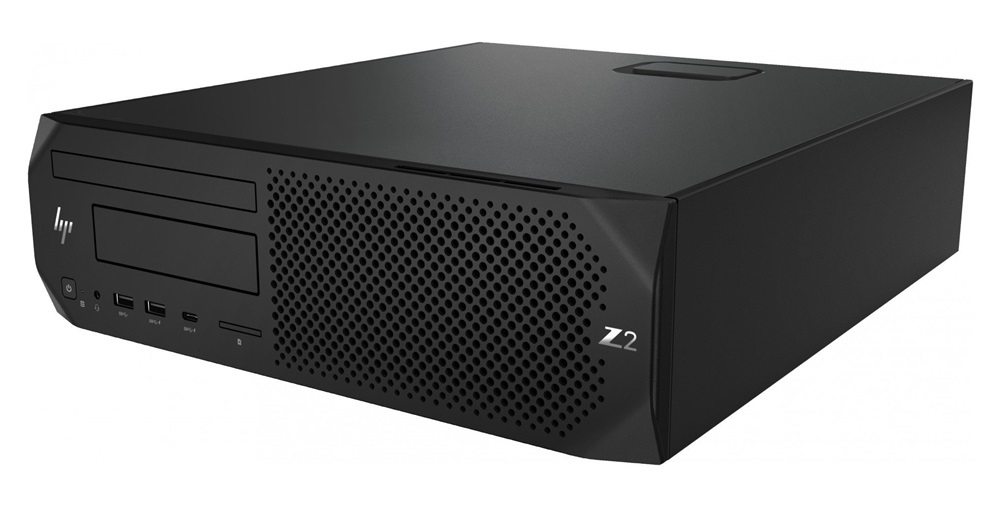
As for HP, I think they are very good and I use an SFF for my local server, especially for storage. Personally, I find it incredible how they managed to fit four hard drives into a toy like this, and on top of that, it also comes with an M.2 SSD.

All the best! :v:

A fundamental consideration is that the third-party repos do build packages for Enterprise Linux. That is all RHEL-compatible distros. If I’d request something from EPEL, then every EL-user would benefit. However, the AlmaLinux 10 x86_64_v2 is the only V2 distro. Building for it does not benefit other EL-distros.


Red Hat chose that RHEL 10 will not have LibreOffice (nor Firefox) as RPM. They recommend flatpaks, if user needs such things (and have Firefox in “RHEL 10 flatpak” repo). AlmaLinux does package Firefox as RPM.

I don’t see LibreOffice in Rocky 10 nor CentOS Stream 10 repos.

I know that firefox is available from EPEL, but it is an older version, 128 ESR if I remember correctly. You can always get it mozilla’s site. The EPEL version, (I think, I haven’t paid attention as to whether it was from Alma or EPEL) doesnt play some videos–it’s kind of an edge case, but, for example, someone sent me a *mov file from their iPhone and I couldn’t play it on the Alma (EPEL?) version of firefox, though it worked when I just downloaded the version from Mozilla.
On the other hand, I doubt that will affect too many people, especially those using it for work.
Libreoffice hast to be gotten from libreoffice’s site, but that’s pretty easy. To spam my own page, I have a page on getting Alma, or any RH clone, to work with labwc or dwl, which are Wayland versions of openbox and dwm at RHEL10 and some lighter window managers. The one thing that I use that I wasn’t able to get working, so far, is Japanese input. Ibus doesn’t seem to work with my setup, and I wasn’t able to get fcitx5-anthy installed, ran into a rather funny one, where I was able to build the srpms for fcitx5-data and fcitx5, but if I tried to install either one, it said it needed the other. And ibus won’t start in either labwc or dwl (It works fine with a standard Gnome desktop environment.).

As for HP, I think they are very good and I use an SFF for my local server, especially for storage. Personally, I find it incredible how they managed to fit four hard drives into a toy like this, and on top of that, it also comes with an M.2 SSD.

‘which’ SFF model are you using ? (unless they’re not the USFF/USDT versions)
If the 6200 or 8300 series, ‘how’ do you install more disk devices within it ?
I ‘can’ now see that if you used the $7 SCSI-over-USB external cases, you could plug in ‘4’ using the USB 3 ports on the back…

On the CMT ‘towers’ I install the 3.5" drive bay adapters that provide 4 x 2.5" drive bays, such that I can add ‘8’ drives (other than the ‘4’ on the mommy board SATA ports, which I use for an internal ‘mirrored’ O/S configuration).

I know that firefox is available from EPEL, but it is an older version, 128 ESR if I remember correctly. You can always get it mozilla’s site. The EPEL version, (I think, I haven’t paid attention as to whether it was from Alma or EPEL) doesnt play some videos–it’s kind of an edge case, but, for example, someone sent me a *mov file from their iPhone and I couldn’t play it on the Alma (EPEL?) version of firefox, though it worked when I just downloaded the version from Mozilla.

THAT is why I use the Palemoon web browser (which split off from Firefox just before they ‘went woke’). It’s the same version across all O/S’s they provide versions for, but YES, if you’re using EL 7.9 or older, there is a cutoff for ‘their’ releases as well (though, you can still use the newer 32- bit versions).

IF the method of creating the V2 versions of RPM’s is available for ‘me’ to review, perhaps ‘I’ can use the process to create the ‘v2’ version of Palemoon (since they provide the source code) and I’ve already created the method of converting their ‘tar’ file into an RPM…

A fundamental consideration is that the third-party repos do build packages for Enterprise Linux . That is all RHEL-compatible distros. If I’d request something from EPEL, then every EL-user would benefit. However, the AlmaLinux 10 x86_64_v2 is the only V2 distro. Building for it does not benefit other EL-distros.

AH, but it WOULD benefit the ‘users’ of the other EL-distros, as they all funnel over to Alma ‘v2’ to continue the use of their existing hardware…
(who cares about the other ‘distros’… ‘They’ decided to go the ‘v3 path’, I say ‘let them crash…’)

It’s true that it’s more for the office and that the server side doesn’t really favor it. But as storage space it’s very good, especially with a Linux distribution. I chose it because it has a large number of SATA ports, but also because it has “workstation” in the name. My thought was that I give it torture on the operating side anyway.

Specs: Intel Core i7-9700, 16 GB DDR4, 256 GB SSD M.2 + 3 TB HDD.

There is nothing forcing anyone to use RHEL 10, and there is nearly another seven years left on RHEL9. By that time, a typical x86_64 v2 server will be over 18 years old. No responsible enterprise should be using hardware that old. In Dell land that is gen12 servers aka Rx20 and older. Some gen13 servers will need a CPU upgrade and maybe a network card change, which be a minimal cost on the refurb market.

Remember, RedHat makes its money selling support contracts to enterprises, not hobbyists like yourself. Remember, too, that there is at least a 5% performance improvement to be had by targeting x86_64 v3 over x86_64 v2. If I were a paying customer (and we do have some RHEL licenses), then that performance is worth a lot of money. It more than offsets ditching old hardware that is well past its sensible use-by date. We are an HPC site and spend a considerable amount of time producing optimised binaries. Every 1% of performance improvement is worth $10k for every $1 million you spend on servers. So a 5% performance improvement is worth a lot of money to RedHat’s paying customers.

Being a University HPC, money doesn’t grow on trees, and the ditching of support for x86_64 v2 will have a minimal impact. The vast majority of our servers will have been retired and to be honest good ridance to them, they are tricky to support as their iDRAC’s just dont work with modern browsers. The only thing it impacts is a couple of R420 servers used as testing boxes for new images for the main HPC cluster. I have some R330’s to recycle that will do. A bit shy on RAM with a maximum of only 64GB, but they are for functional testing so will do.

A much bigger issue for us is the loss of Omnipath support. Hopefully elrepo will offer support for those cards, otherwise I will have to roll something myself.